Some ways of helping do hundreds of times more good
The same $30,000 buys about one year of healthy life in a rich country's health service, or around 300 through the most cost-effective charities.
Effective altruism is a community using evidence and careful reasoning to try and find the best ways to tackle the world's biggest, most neglected problems.
Big hearts, big spreadsheets.
Want to get involved?
Free · under two hours · no sign-up
“The century’s biggest idea”The Economist on effective altruism, October 2026
Written about in




The same $30,000 buys about one year of healthy life in a rich country's health service, or around 300 through the most cost-effective charities.
There are so many problems that it's hard to know where to start. We look for the largest and most neglected, where an extra person or euro goes furthest. Today that includes global health, animal welfare, AI and pandemics, and future generations.
Working out how to do the most good is hard. So we act on the best evidence and reasoning we can find, stay wary of overconfidence, and change course when we learn more.
Ending slavery and votes for women sounded crazy once. Now they look obvious. Caring about those others overlook, from the world's poorest people to farmed animals, future generations and even invertebrates, can still go against the grain.
Nobody can figure this out alone. EA is a community where people test each other's ideas, share what they learn and help each other act on it, from a first career conversation to starting a charity.
The full argument takes about five minutes. Read it, step by step.
$2bnmoved to effective causes in 2025 alone
Effective altruism helped give rise to the School for Moral Ambition, Geefrevolutie, Doneer Effectief and Safe AI Netherlands.
Charity Entrepreneurship has incubated dozens of highly effective charities.
Work on systemic problems, from animal welfare standards to lead exposure.
Effective altruists helped build the field of AI safety. They’re driving the debate and holding big tech to account.
Start with our free course, then go deeper with the selective EA Fellowship.
Find the charities where your money goes furthest, and help us grow the community.
Find people near you, online and at conferences around the world.
Find work on pressing problems, with a career guide, a jobs board for the Netherlands and selective international bootcamps.
In the 2024 EA Survey, only the US, the UK and Germany had more respondents than the Netherlands.
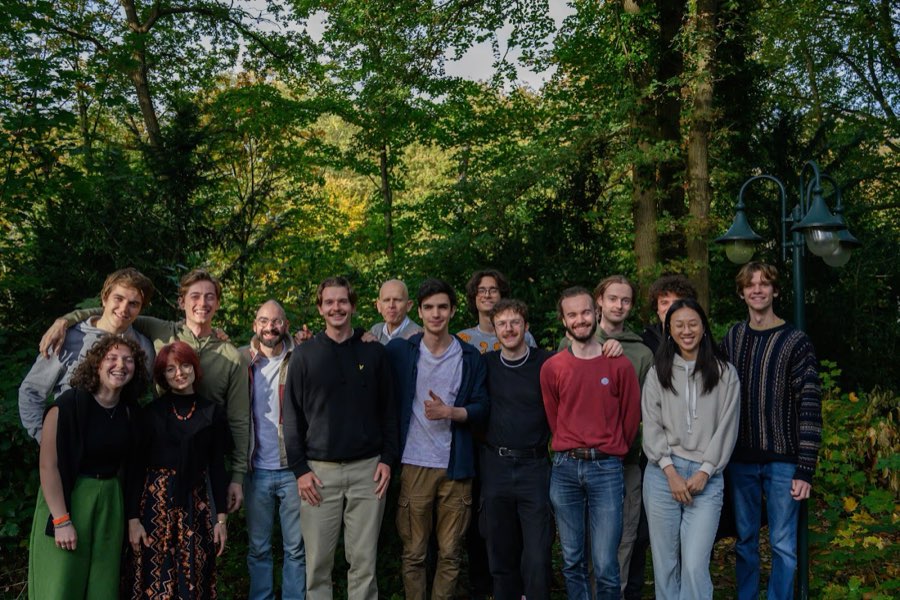
It started in 2017 with a small group. Today hundreds of people take part, in nine cities and online.

“There was some action that I could personally take that, with relative certainty, would save lives. How incredible is that?”
“The huge network I’ve gotten in contact with through EA has been amazing.”
“I was in my fifties before I sat down to deliberately work out how and where I potentially could do the most good… I wish I would have learned about impact earlier in my career.”
“EA at its best is like the Quakers in the 18th century: very weird, but also very right about some of the most fundamental issues of our time.”
“EA convinced me, in the 2010s, that pandemics and AI were very big deals, that could pose major risks and change the world. 5 years ago, it got me to spend my career ensuring we could read AI minds.”
“If asked ‘which 2018 community now looks most prescient based on how the intervening 5 years unfolded?’, I think it’s hard to come up with better nominations than EA.”
“When it comes to smart and many of the very smartest young people, the influence of Effective Altruism on their thought is radically underreported and underrepresented.”
On first hearing the case for effective altruism, “the arguments were just so compelling.”
Photos of Rutger Bregman by Maartje ter Horst (CC BY 4.0), Tyler Cowen (CC BY-SA 3.0), Liv Boeree by Web Summit (CC BY 2.0) and Patrick Collison by JD Lasica (CC BY 2.0), via Wikimedia Commons.
Try our quick, free course on the world's most pressing problems. Six short units, start anytime, go at your own pace. Think Duolingo for doing good.
Prefer to talk to a person first? Come to one of our events, or book a call with one of our co-directors.
The world's most pressing problems · about 100 minutes
A selective, five-week programme for people ready to go deeper. Expect about 3.5 hours a week of reading and small-group discussion. It's a real commitment and places are limited, so we ask you to apply. The next round starts in early 2027.
Join the waitlist